How to Clean Moss and Weeds from Patio Pavers
Learn how to safely clean moss and weeds from patio pavers, when to re-sand, and how to decide if it’s time to call a professional pressure washing company.
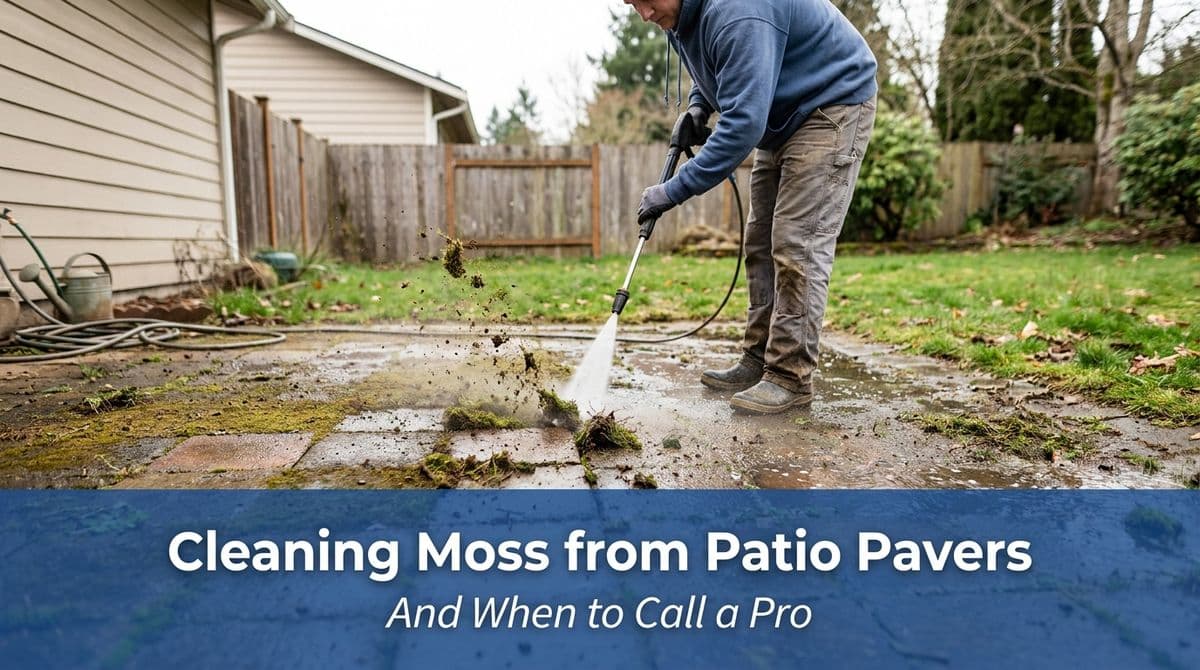
How We Clean Moss and Weeds from Patio Pavers
We recently got a call from a customer — let’s call him Mark — who owns a home with a beautiful paver patio under a gazebo. The problem? The “beautiful” part was getting hard to see.
Mark told us the patio was about 200 square feet, and weeds were pushing up through the joints while moss was creeping across the surface. He’d had it pressure washed last year and loved how it turned out, but now he was out of state and getting ready to list the home for sale. He needed it cleaned up quickly before real estate photos were taken and wanted to know two things:
- Roughly what it would cost for us to clean it
- Whether the job was simple enough that he could just have a handyman do it for less
We walked him through a ballpark price range and also explained what’s involved in cleaning pavers the right way. That conversation is exactly what we’ll share here: how we recommend you clean moss and weeds yourself, and when it’s worth calling a pressure washing pro.
Why Moss and Weeds Love Your Paver Patio
Moss and weeds show up on almost every paver patio eventually, especially in shady or damp spots like under a gazebo.
In Mark’s case, the patio stayed shaded most of the day, so moisture lingered in the joints. When sand between the pavers starts to wash out or compact, it leaves little pockets where:
- Weeds can sprout from blown-in seeds
- Moss can root into the damp, gritty film on the surface
That’s why a patio can look great after a cleaning one year and be green and weedy the next. The goal isn’t just to blast away the growth, but to remove roots and then refill the joints so they’re less inviting next season.
DIY: How to Remove Moss and Weeds from Pavers
If you’re reasonably handy and the area isn’t huge, you can tackle a lot of this yourself. Here’s the basic process we walked through with Mark, simplified for homeowners.
Step 1: Dry Weed and Moss Removal
- Start on a dry day so plants are easier to pull.
- Use a weeding tool or flat screwdriver to scrape weeds out of the joints, roots and all.
- For moss, use a stiff-bristle broom or deck brush to scrub it loose from the surface.
- Scoop or sweep all debris into a bag so seeds and spores don’t wash right back into the joints.
Step 2: Apply a Cleaner (Optional but Helpful)
You don’t have to use harsh chemicals to treat moss and algae. For most patios, we suggest:
- A paver-safe outdoor cleaner mixed according to label directions, or
- A simple solution of water and a small amount of dish soap for light growth
Apply with a pump sprayer, let it sit for 10–15 minutes, and keep it from drying out. This helps break down the organic film moss clings to.
Step 3: Rinse Carefully (What Most People Get Wrong)
This is where homeowners often damage their pavers. The instinct is to grab the most powerful pressure washer and “erase” everything. The problem is that you can easily:
- Etch or stripe the paver surface
- Blow out too much joint sand, leaving pavers loose
Our advice if you’re DIY’ing:
- If you must use a pressure washer, stick to a wide fan tip and keep the nozzle at least 12 inches away.
- Use the lowest pressure that still rinses off loosened moss and dirt.
- Work at a shallow angle, not straight down into the joints.
A regular garden hose with a good nozzle is often enough for light moss after a good scrubbing, and it’s much safer.
Don’t Skip This: Re-Sanding the Joints
After Mark’s last cleaning, the patio looked great, but some of the joints were never properly re-sanded. That made it easier for weeds to come back this year. Once everything is clean and dry, you’ll want to refill the gaps between pavers.
How to Re-Sand Paver Joints
- Let the patio dry completely (usually a full sunny day).
- Spread paver joint sand or polymeric sand over the surface.
- Use a push broom to sweep sand into all the joints until they’re filled just below the chamfer (the edge of the paver).
- Carefully sweep off excess sand from the surface.
- If using polymeric sand, follow the bag directions and lightly mist with water to activate it without washing it out.
Properly filled joints help lock pavers in place and make it harder for weeds and moss to get established again.
When It’s Worth Hiring a Pressure Washing Pro
During our call with Mark, we gave him a rough price range for his 200-square-foot patio and explained that we’d firm it up after a quick on-site look. For us, a small patio like that usually lands at or near our minimum service charge, because we’re bringing out professional equipment, cleaners, and the time to do it right.
Here are signs you may want to bring in a pro instead of tackling it yourself:
- You’re selling your home and need it to look “photo ready” fast.
- The patio is heavily covered in moss, algae, or black staining.
- You’re not comfortable using a pressure washer near pavers and joints.
- Some pavers are already loose, sinking, or shifting.
- You have limited time and want a guaranteed, even result.
On Mark’s gazebo patio, the priority was curb appeal for listing photos and avoiding damage before a home inspection. In that situation, hiring a pro typically pays for itself in how much better the space photographs and shows.
DIY vs. Pro: How to Decide for Your Patio
If you’re on the fence, here’s a simple way we help homeowners think it through:
- Choose DIY if: the area is small, growth is light, and you’re mainly dealing with surface moss and a few weeds.
- Hire a pro if: you’re prepping to sell, the patio is large or intricate, or you see signs of damage and long-term neglect.
We’re always happy to talk through your specific situation, just like we did with Mark. Whether you roll up your sleeves or bring us in, the key is using the right process so your paver patio looks clean, stays stable, and is ready to enjoy — or ready to impress buyers — for many seasons to come.